
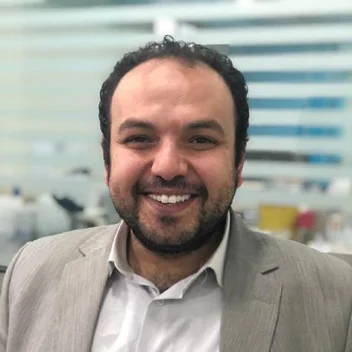
From medicine to software
Mohamed’s path began in medicine. He earned his MBBCh, completed a Master’s degree in Radiodiagnosis, and worked in radiology, where precision, observation, and structured thinking were part of daily life. Curiosity, however, kept pulling him toward building, systems, and the logic behind how things work.
That interest grew into a serious self-taught journey through software development, shaped by persistence, courses, scholarships, technical communities, practical experimentation, and real projects. He began with frontend development, then moved deeper into backend logic, databases, architecture, cloud infrastructure, and the broader shape of systems.
Work and approach
Today he builds full-stack software, SaaS products, developer tools, AI-powered products, and business systems with TypeScript, React, Node.js, NestJS, Prisma, and cloud-native tooling.
His experience spans very different organizations and industries—from governmental and legal contexts to education, real estate, emerging technology, and experimental products. That range shaped a broad perspective on people, business, and problem-solving, and a preference for turning vague or messy ideas into clear, useful, scalable systems.
He thinks analytically and creatively: drawn to patterns, frameworks, system architecture, and long-term structure, while remaining attentive to meaning, usability, and the human side of what is built. He continued that development through a Professional Master’s degree in Cloud Computing Networks and later into AI—not only using intelligent tools, but understanding them, building with them, and exploring how they reshape software creation.
Writing and the book
Underlying that path is sustained curiosity and a desire to understand things more fully. Mohamed writes about software engineering, systems, AI, product building, and the questions that sit between theory and practice.
He is the author of «النحو الخفي للعقل والآلة: مدخل مبسط إلى الأنظمة الشكلية في علوم الحاسب» (The Hidden Syntax of Mind and Machine), an Arabic introduction for non-specialists that moves from language, logic, and symbols to formal modeling, verification, and how we determine whether machines behave as intended. The 269-page book was published by Nile Culture and carries ISBN 978-633-8423-23-0.